What is it?
An edge-AI smart bin that automatically sorts waste into 4 categories using a camera and on-device YOLOv8 model, with no cloud required.
What needed solving?
Manual waste sorting is inconsistent and time-consuming. Recycling stations need automation that works without internet connectivity. Most existing solutions depend on cloud APIs with latency too high for real-time servo actuation.
Manual waste sorting is inconsistent and time-consuming.
How it was built
System design
How we solved it
Built a Raspberry Pi 5-powered bin with a live camera feed running YOLOv8 inference locally. A dual-servo mechanism routes waste to the correct compartment. A Node.js REST API exposes a recycling marketplace so users can sell sorted materials.
Why these technologies?
| Technology | Why we chose it | Role in system |
|---|---|---|
| YOLOv8 | Best real-time object detection for edge deployment; runs at ~50ms inference on Pi 5 CPU without a GPU. | Core inference engine |
| Raspberry Pi 5 | Sufficient compute for YOLOv8 inference; GPIO pins drive servo motors directly; USB interface for camera. | Host computer + GPIO |
| Node.js | Lightweight async runtime for the marketplace API; handles concurrent recycling requests without blocking I/O. | Marketplace API |
| Tinkercad | Browser-based 3D CAD with no cost or setup, ideal for rapid prototyping of the bin enclosure and servo mount. | 3D enclosure design |
Key metrics
What we achieved
4-class waste classification (paper, plastic, metal, organic) at >85% accuracy
Fully local inference with zero cloud latency or external dependency
Custom 3D-printed dual-servo sorting mechanism
Node.js REST API backend with recycling marketplace endpoints
Recyclable material tracking and sell-back workflow
Technologies used
Final Product
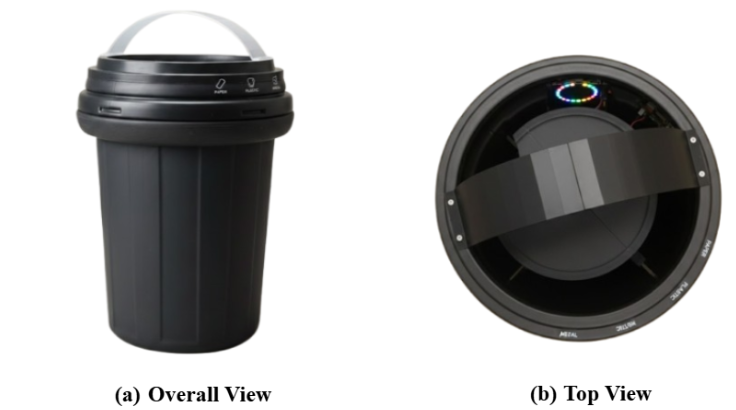
The completed AiBin unit: a standard waste bin fitted with a dome lid housing the Pi Camera V2, with a servo-driven cross-divider inside routing waste into four labelled compartments.
Hardware & Assembly
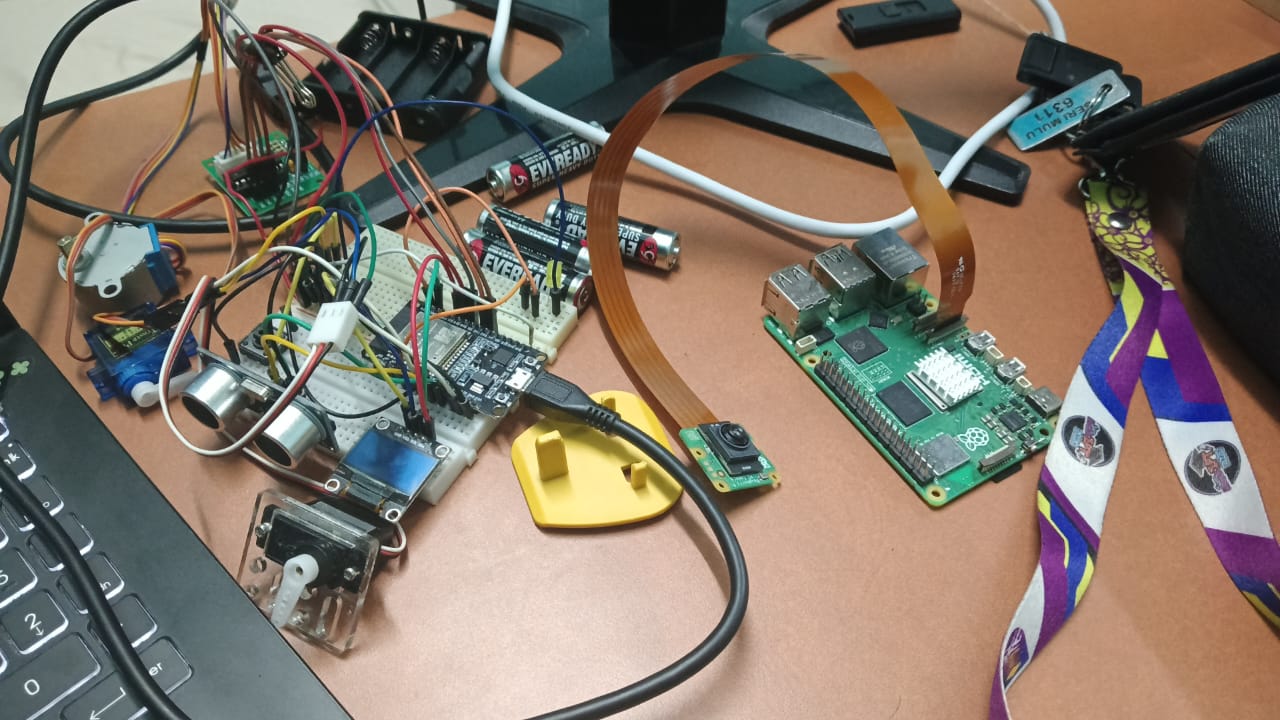
The physical build: Raspberry Pi 5, ESP32, dual servo motors, ultrasonic sensor, and Pi Camera V2 wired up on a breadboard before being mounted into the enclosure.
Bin Interior & Sorting Mechanism
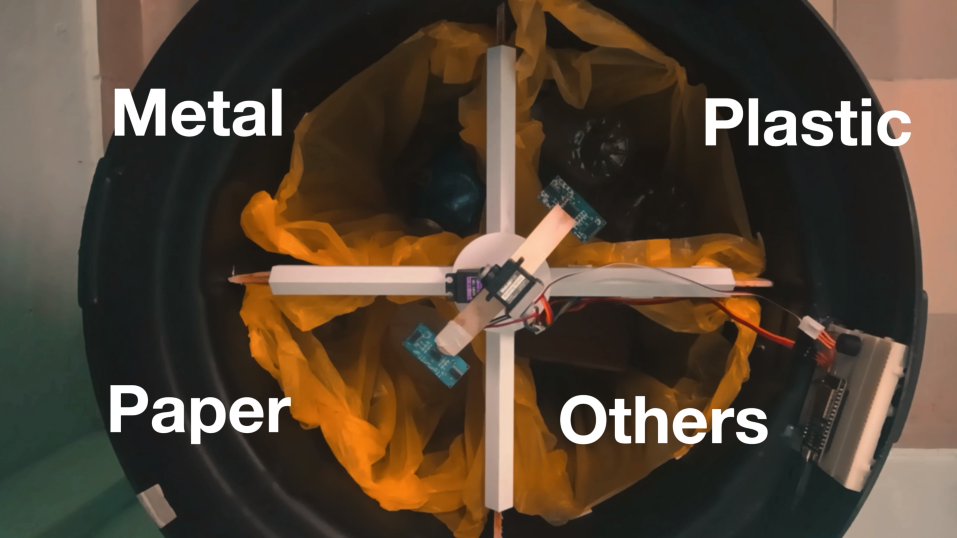
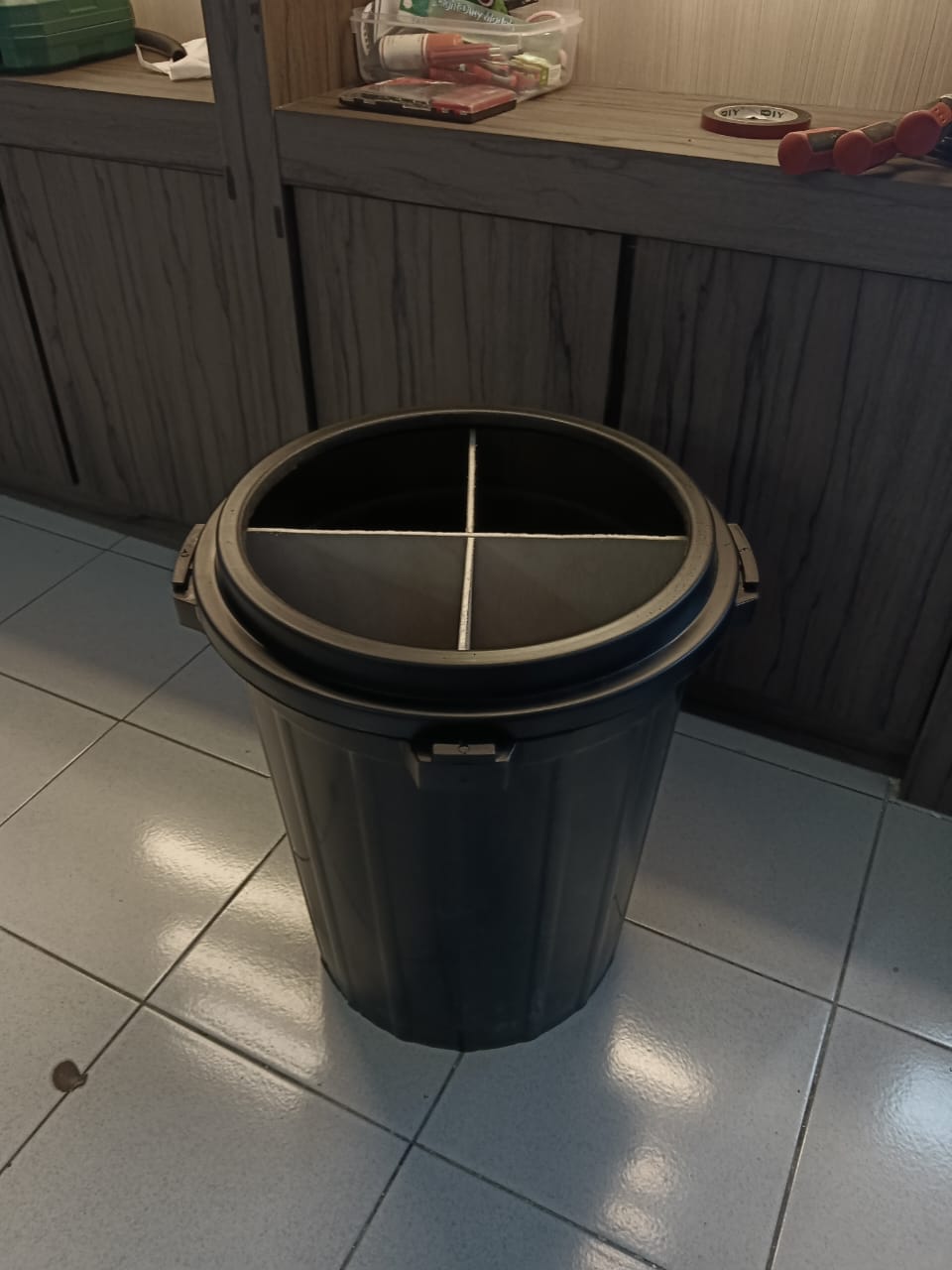
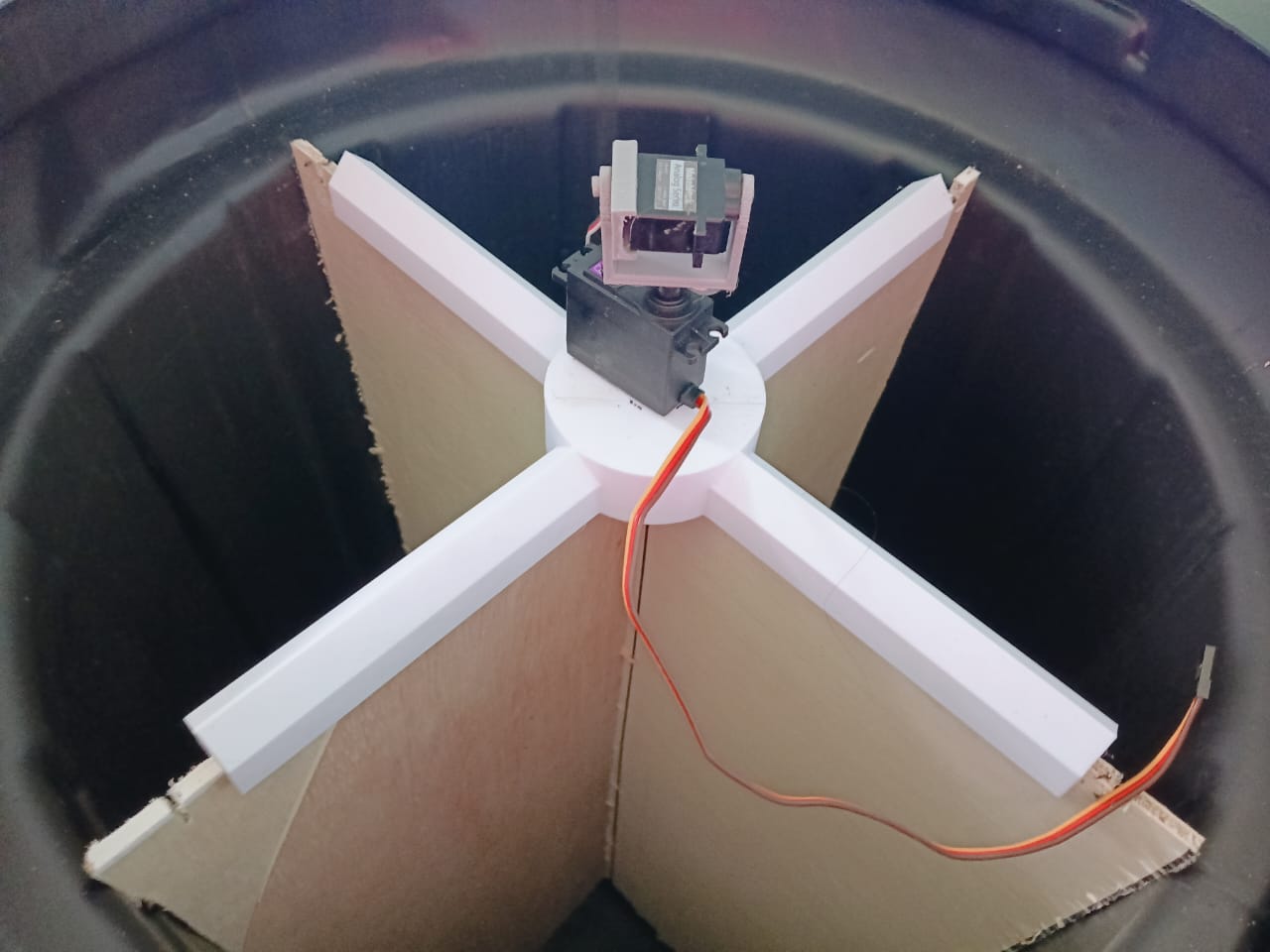
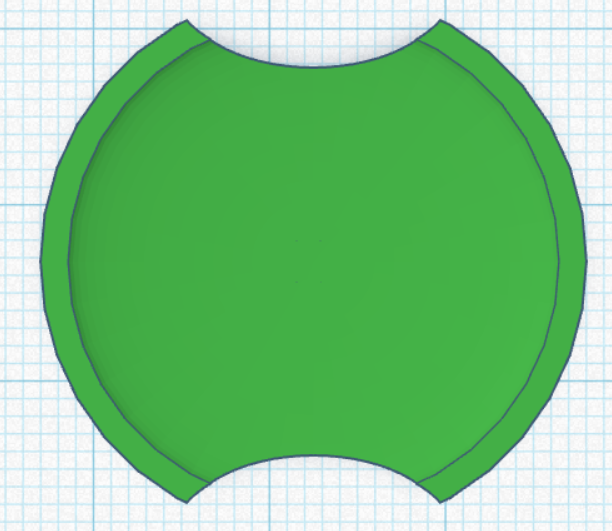
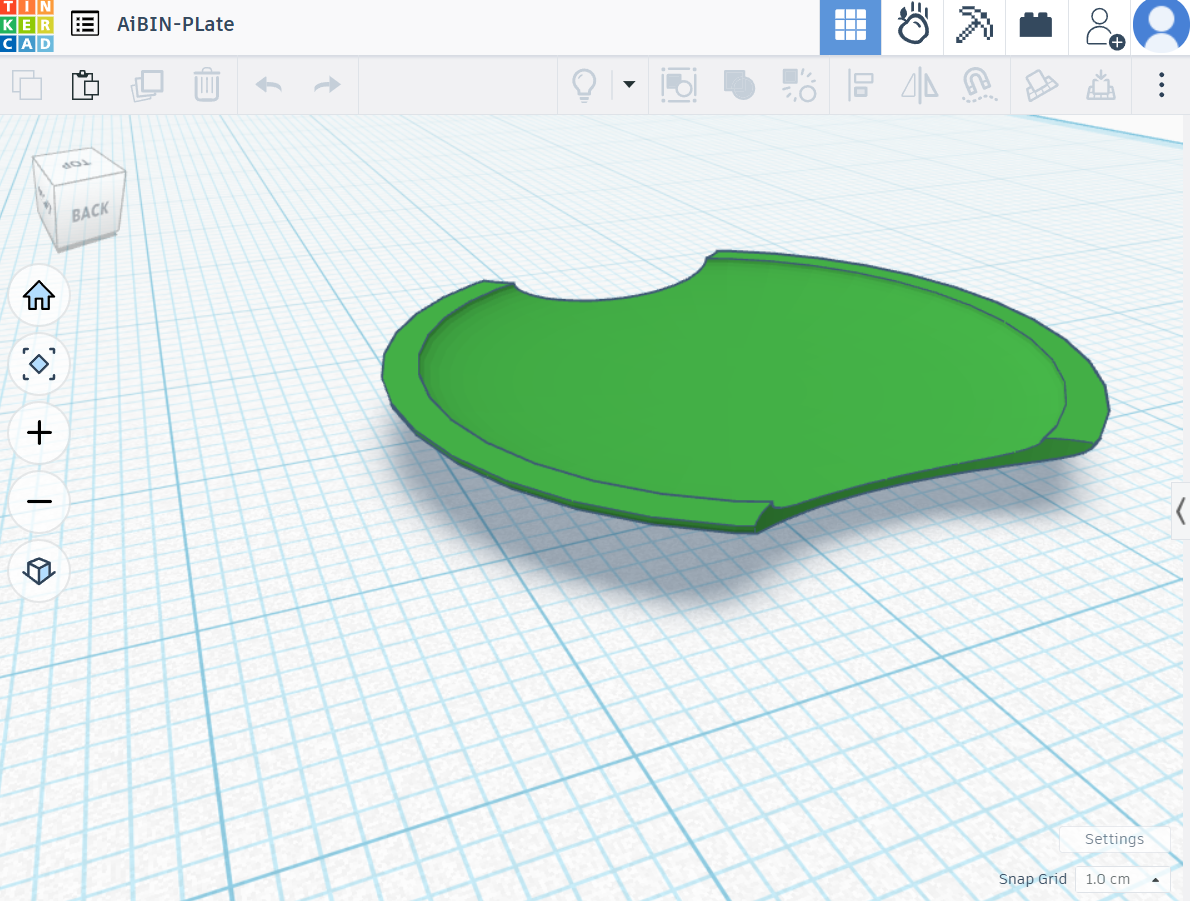
A cross-divider splits the bin into four compartments (Metal, Plastic, Paper, Others). The servo-driven plate rotates to route waste into the correct section based on the YOLOv8 classification.
CAD Design (Tinkercad)
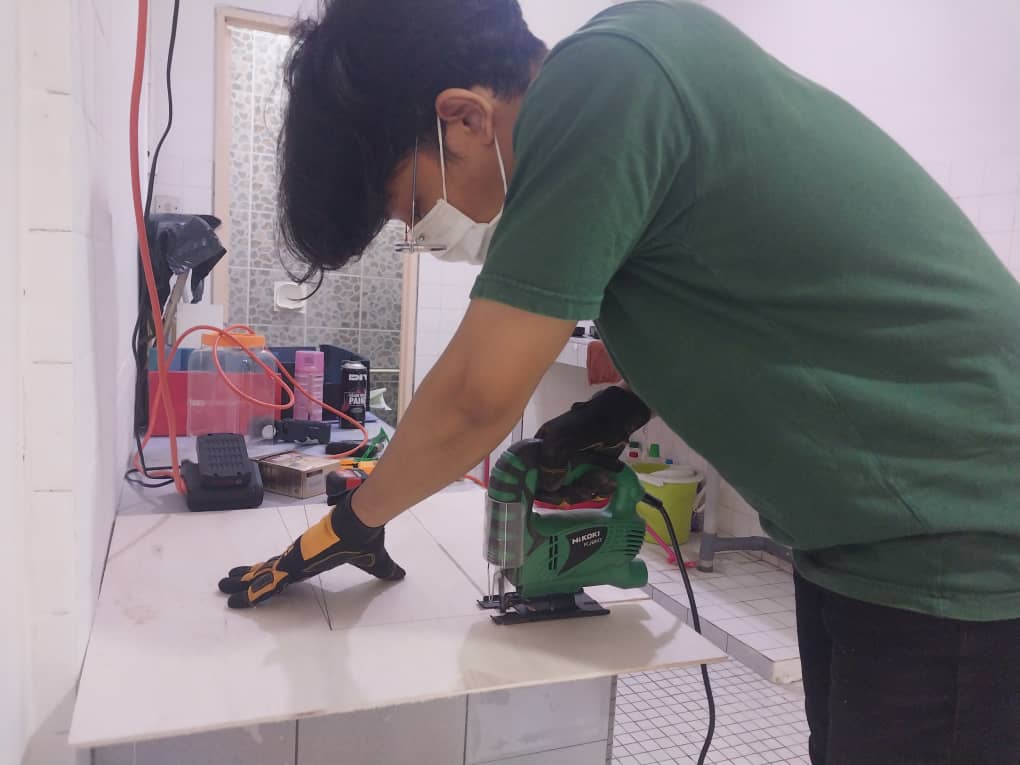
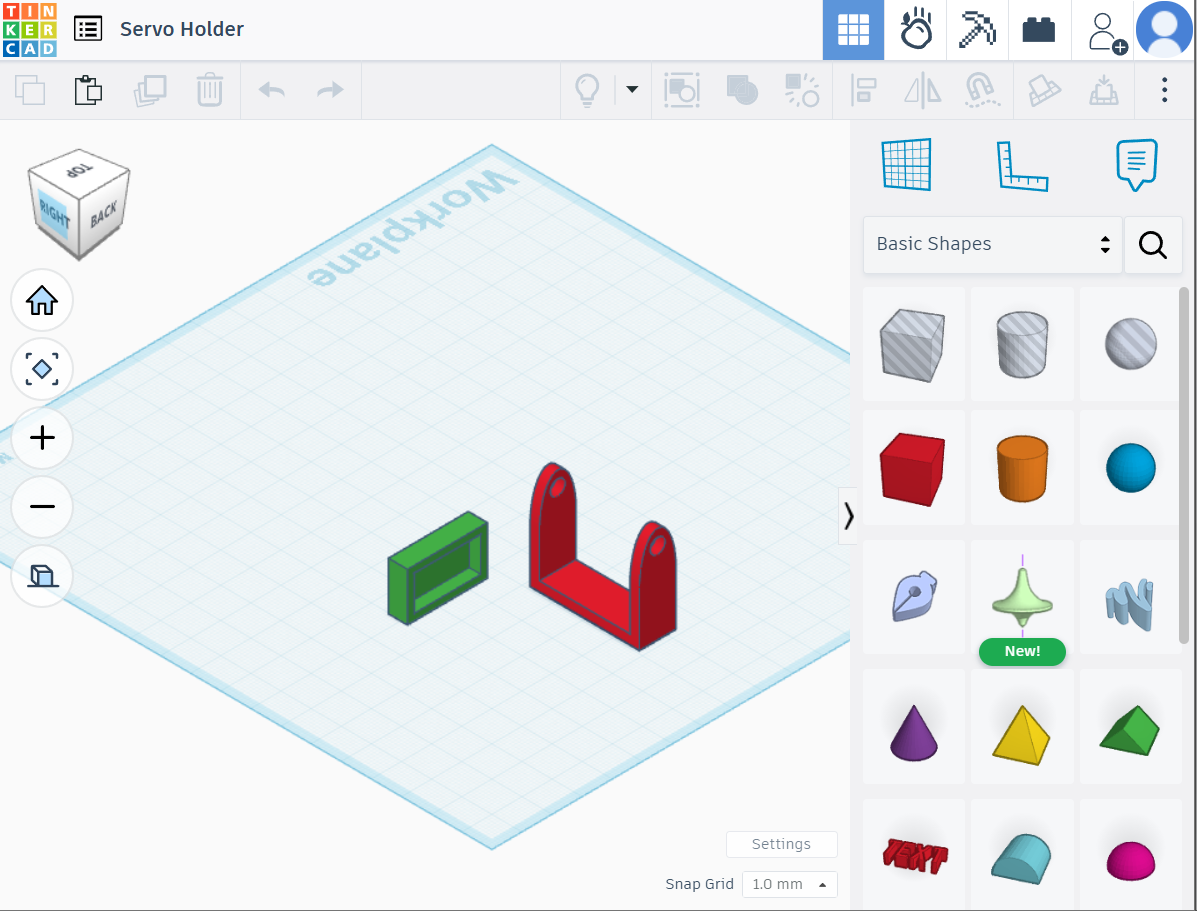
All mechanical parts were modelled in Tinkercad and 3D printed. This includes the servo holder bracket, sorting plate, servo arm linkages, and the dome lid that houses the camera.
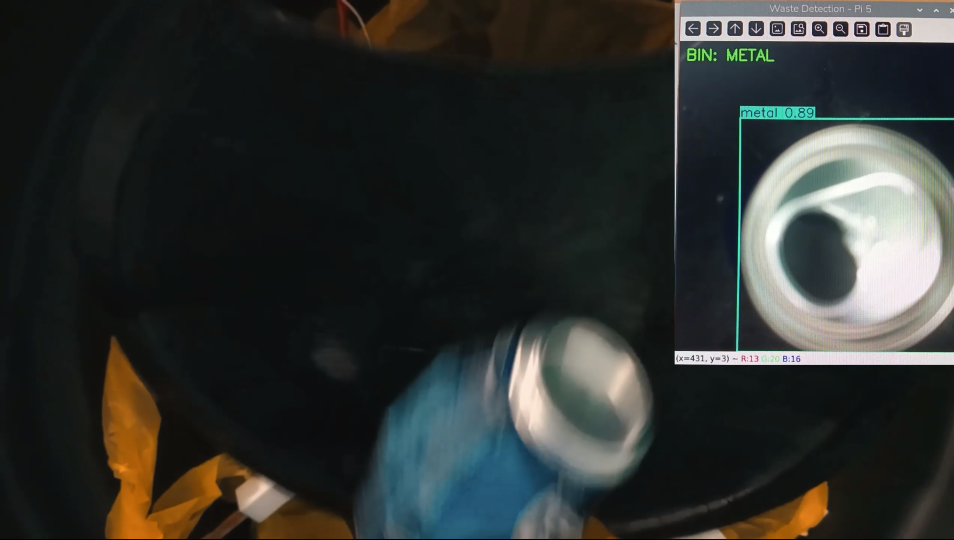
Live YOLOv8 Inference
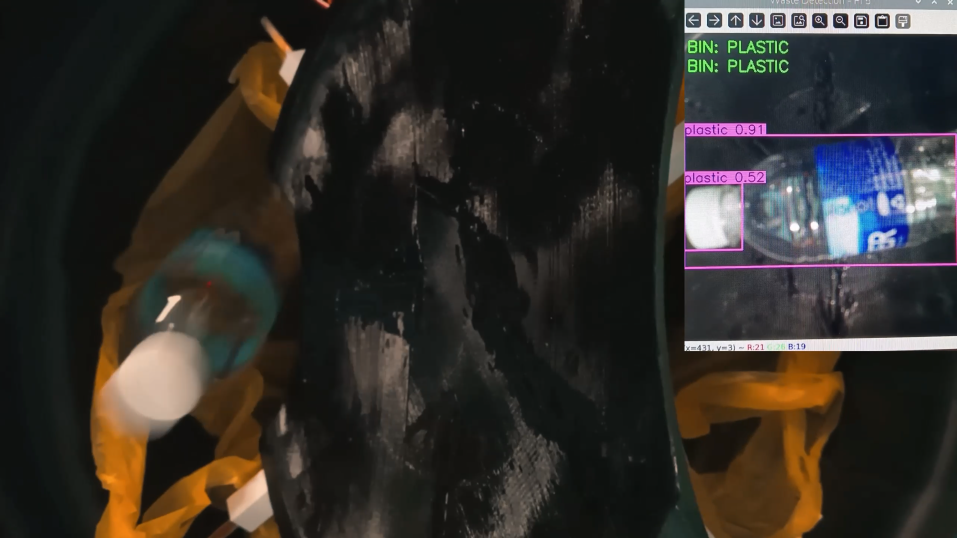
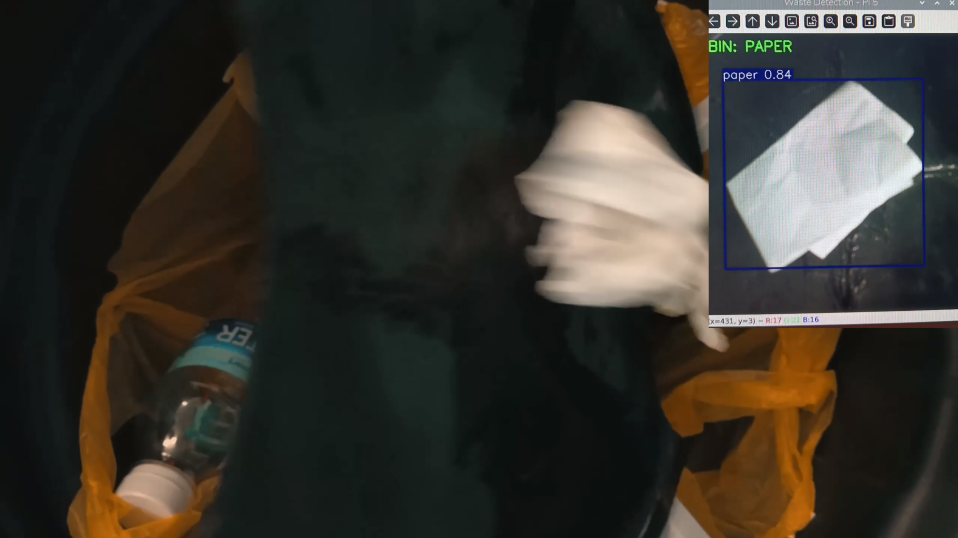
YOLOv8 runs fully on-device at approximately 50ms per frame. The camera looks down into the bin opening; the model classifies the item in real time and triggers the servo before it lands.
Web App
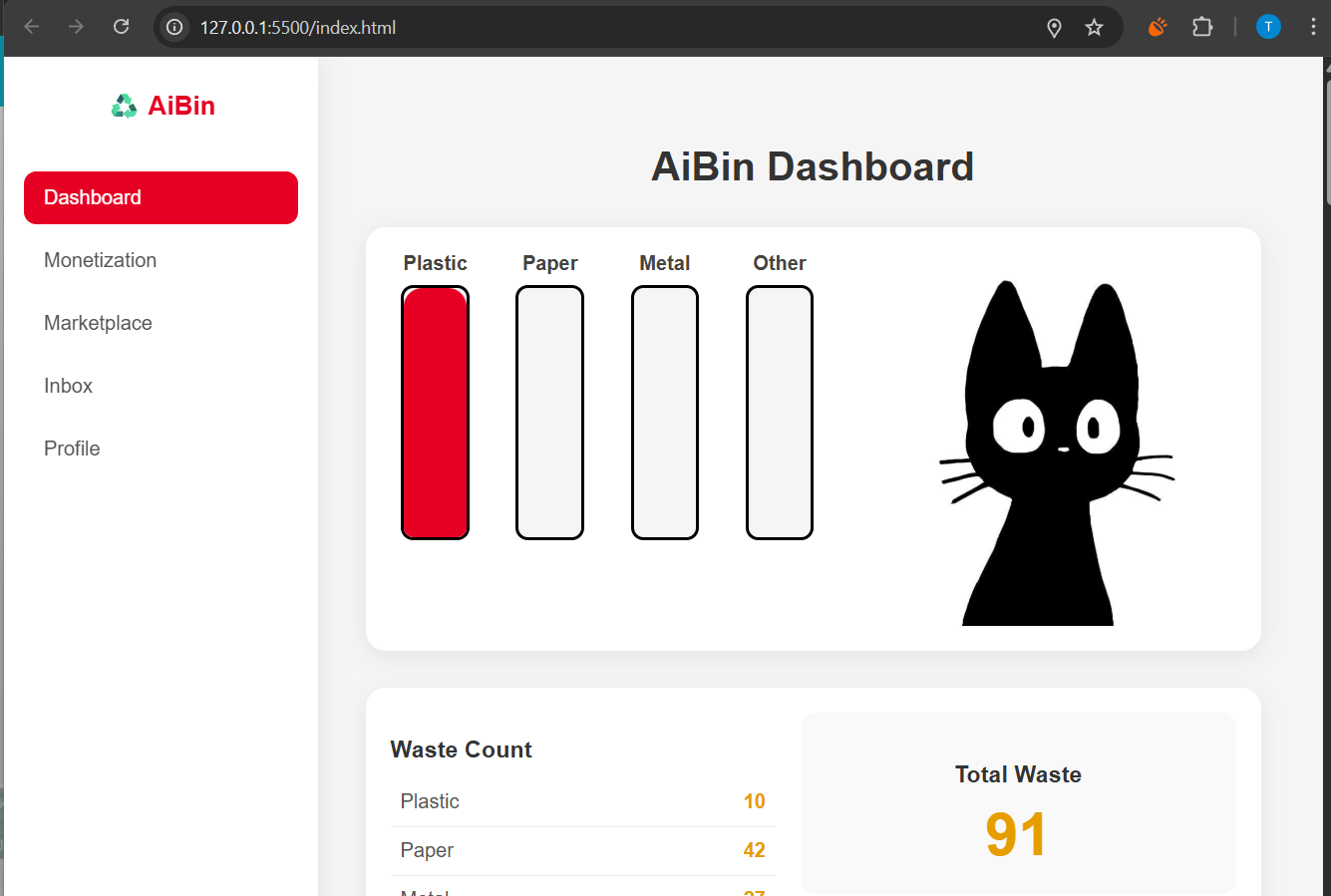
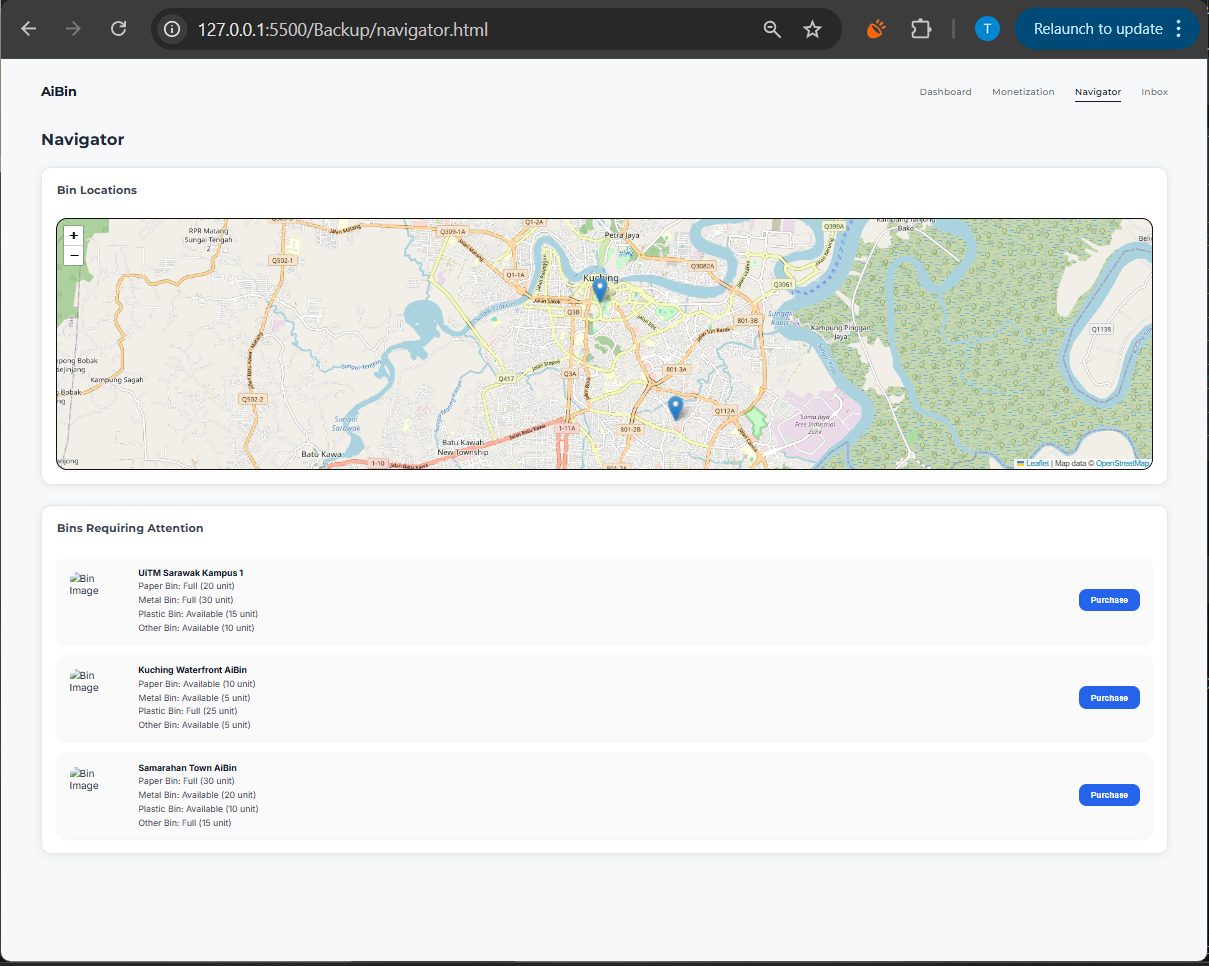
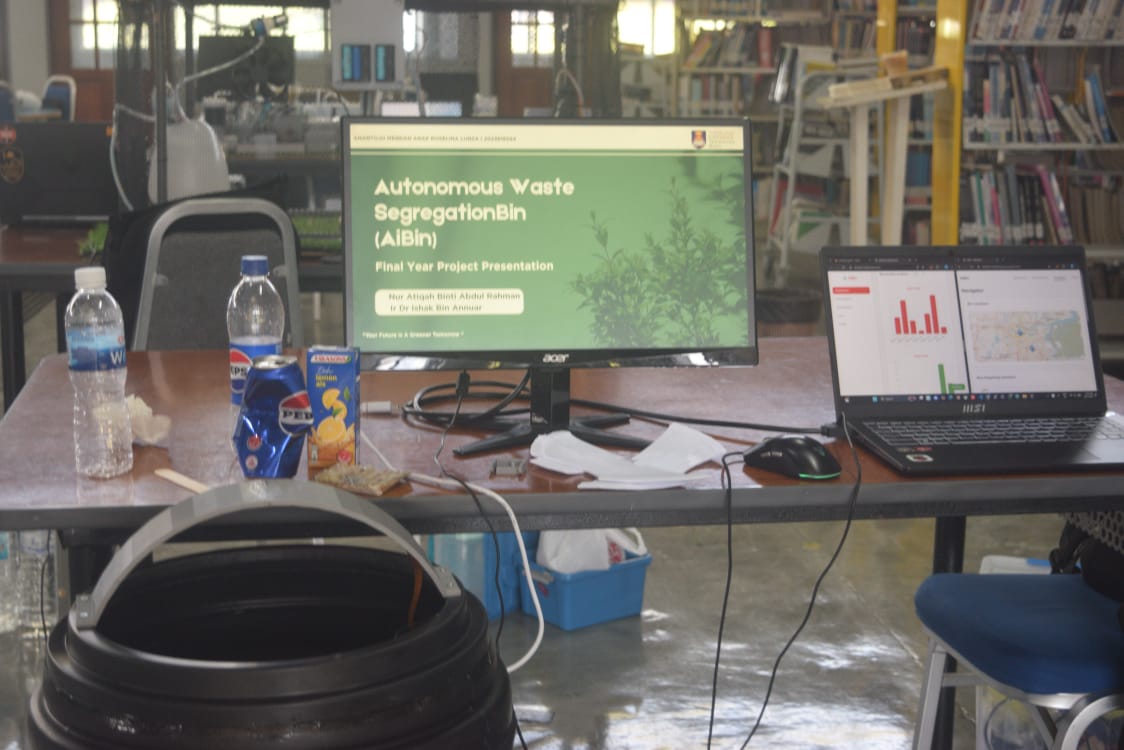
A companion Node.js web app tracks fill levels per compartment, logs waste analytics over time, calculates the monetary value of sorted recyclables, and shows nearby collection points on a map.
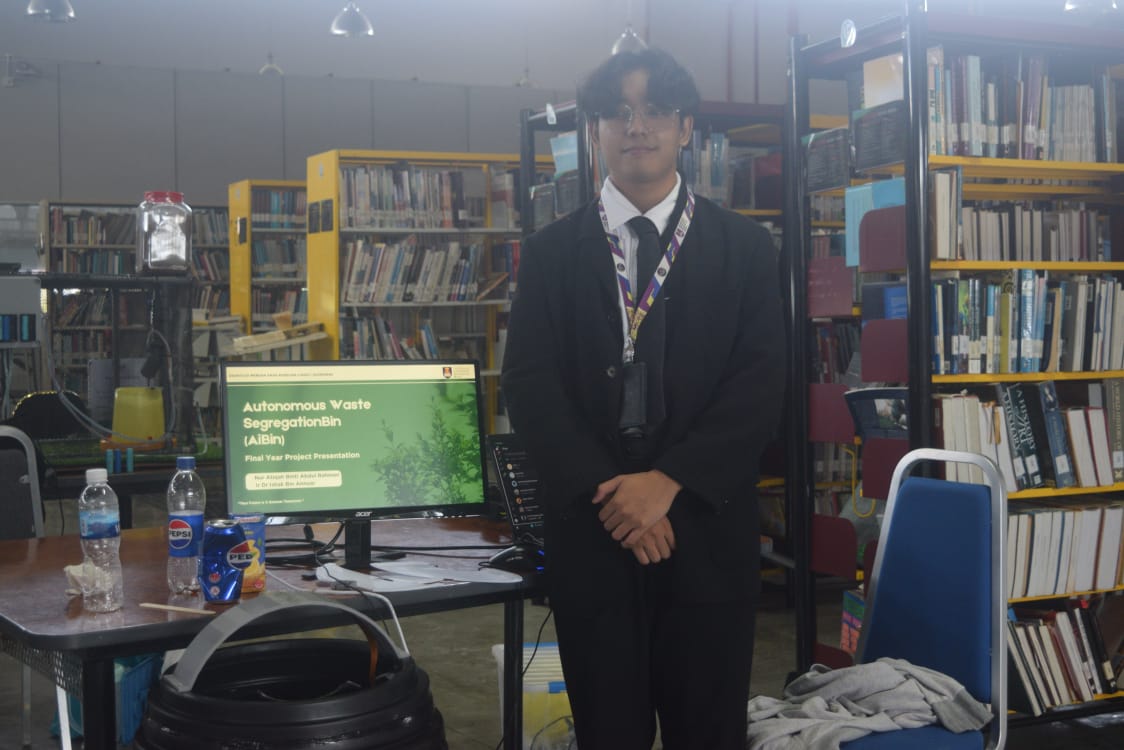
Presentation & Demo Day
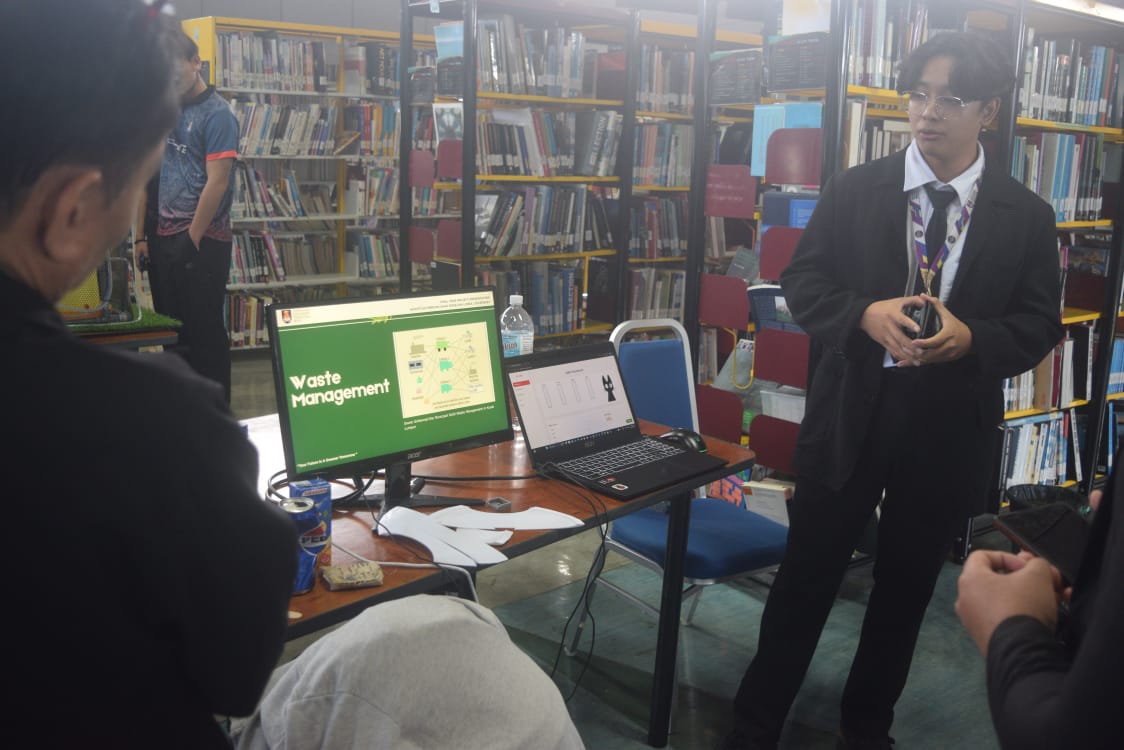
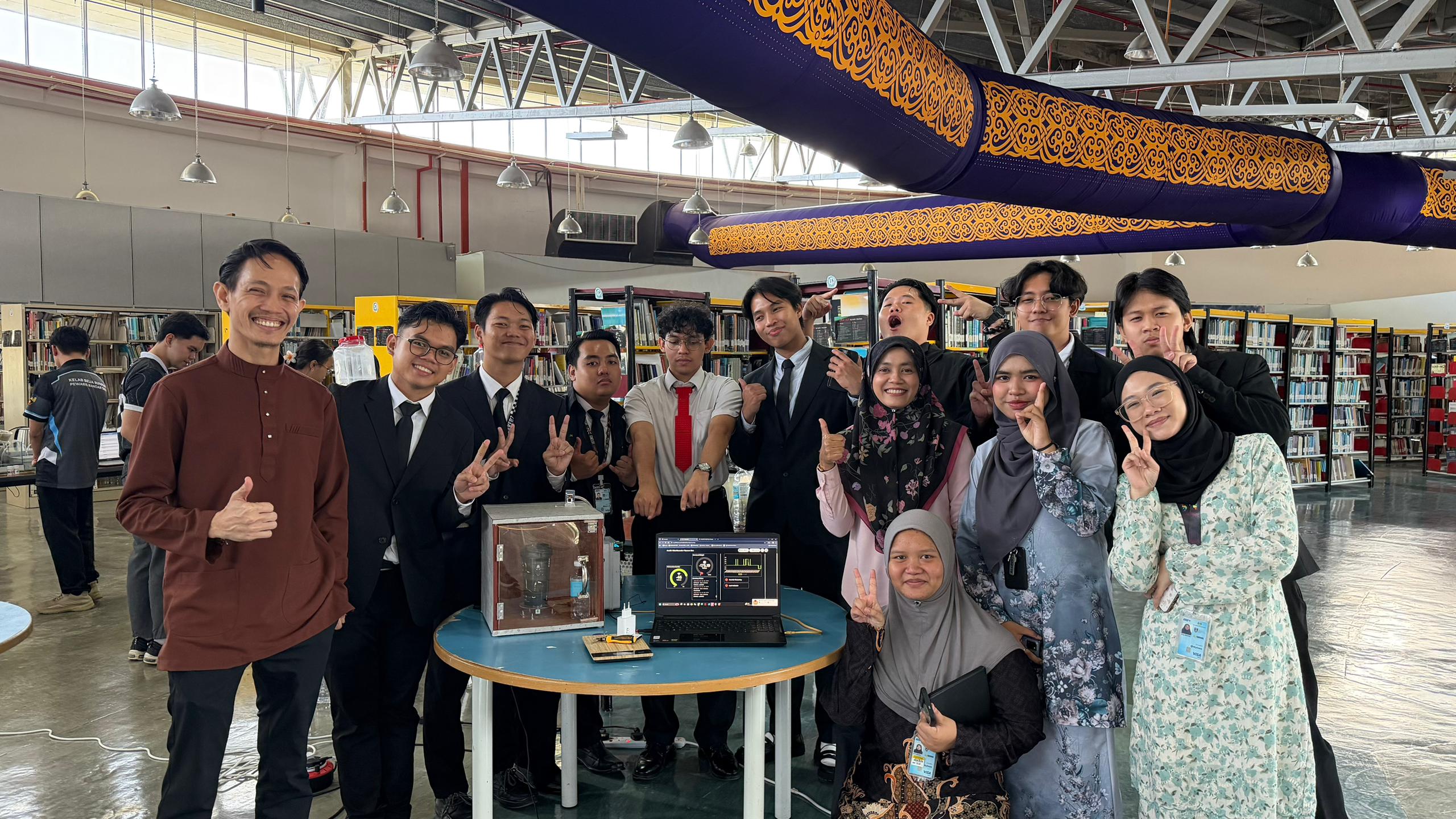
Final year project presentation and live demonstration. The AiBin system was shown to judges with the physical bin, live YOLOv8 inference, and the full web dashboard running in real time.
Why it matters
- •Reduces recyclable waste contamination by sorting at the point of disposal before materials mix in a general bin.
- •On-device YOLOv8 inference uses zero cloud server energy. The system draws only what the Pi 5 consumes.
- •Higher diversion rates for paper, plastic, and metal reduce the volume of material sent to landfill.
- •Encourages closed-loop recycling: sorted material goes directly to the right collection stream.
- •No knowledge of recycling categories required from the user. The bin decides, not the person.
- •Monetization reward reinforces recycling behavior and makes responsible disposal tangible.
- •Deployable in schools, offices, and public spaces to normalise automated waste segregation.
- •Shows that AI hardware projects addressing real community problems are buildable by one person in three months.
- •Sorted recyclables are tracked and given a market value in the companion dashboard (RM per kg).
- •Users can cash out sorted material through the marketplace, turning waste into a micro-income stream.
- •Reduces downstream sorting labour costs at recycling facilities by delivering pre-categorised inputs.
- •Built entirely from off-the-shelf components, keeping the replication cost low enough to matter at scale.
What we learned
AiBin closes the loop from hardware fabrication and ML model training to a live monetization app, all running on a device that fits inside a standard bin lid. The >85% classification accuracy is the headline, but the more important result is that the full system was designed, built, and demonstrated within three months by a single engineer. That timeline proves the barrier to replication is low: any school, office, or community centre with a Raspberry Pi 5 and a 3D printer can deploy an autonomous sorting station. The next step is scaling the dataset to improve edge-case accuracy and piloting a networked deployment where multiple bins report to a single collection dashboard.